Lately, I have been combing my two loves: tea and crocheting. I have only been crocheting for almost a year now, but I have quickly picked up the techniques for amigurumi.
Amigurumi is the Japanese art of knitting or crocheting small stuffed animals, creatures, or objects. The word is derived from a combination of the Japanese words ami, meaning crocheted or knitted, and nuigurumi, meaning stuffed doll.
Through my self teaching of amigurumi I have managed to make a doll for my boyfriend’s niece, a creature resembling “Sack Boy” from the video game “Little Big Planet 2” for my boyfriend, and a candy bowl with lid for my grandma. Even though I find crocheting projects to give to others fun and rewarding, I decided to make a few things for myself.
I took the pattern from Ana Paula Rimoli's book “Amigurumi Two!” for a teapot and gave it some of my own touches. It’s not perfect, but it’s not bad for my first attempt. In the same book is a pattern for a sugar bowl that goes with the tea set. After becoming familiar with the technique of crocheting in the round, I modified the sugar bowl pattern to make a gaiwan. I thought it turned out cute.
I hope to make some cups to accompany the teapot and gaiwan. However, for now I am happy with the two sitting in their own special spots on the shelf.
Tuesday, April 19, 2011
Amigurumi Teaware




Sunday, April 3, 2011
White August’s Morning Geisha Review
Type: Green
Origin: Not Stated
Price: Free sample (regular price – 11.95 for 50g)
Vendor: White August Tea Company
Brewing Method: Per Instructed - 1 teaspoon of leaves, 1 cup of filtered water, heated to 180°F, steeped for 1-3 minutes
Overall Score: 3.7 out of 5
Morning Geisha is a green tea base blended with raspberries and pomegranate. Wow, as soon as I begin to tear the package open I am bombarded with sweet, berry aromas. The pomegranate barely out weighs the raspberry scent I realize after a few more sniffs. The overall aroma is not unlike a freshly made batch of Kool-Aid. The green tea leaves are good size for being a flavored tea. There are a few dried bits of raspberry and pomegranate throughout.
The aroma coming from the kyusuu is very berry. It is sweet and tart at the same time. The color of the liquor resembles a deep yellow honey.
The taste is incredibly sweet at first then the tartness settles on my tongue. I can definitely identify the pomegranate flavor, the raspberry is hard to find, though. There is absolutely no bitterness and only a little astringency.
The only way I can tell it is green tea is from the subtle, delicate flavor and light body. I can’t taste any grassiness or vegetal components. The fruit flavors pretty much take over. Therefore, if you like teas that don’t really taste like tea… then you might want to try this one.
Another thing I don’t like about this tea is that there is very little information about it on the company’s website. A short description is provided, but not much else. It could very well be possible that I missed it, but I searched most of the site and could not find the place of origin or estate that this tea came from. This lack of information might not matter so much to a casual tea drinker… but it bothers me.


Wednesday, March 16, 2011
How to Pronounce Rooibos
Throughout my research of tea, I have come across several different pronunciations of the African herbal “tea” known as Rooibos. The question that I pose is which one is correct… or does it even matter?
First, I want to mention that Rooibos really isn’t tea 
Second, I would like to point out that some definitions classify the word “tea” as anything that is steeped in water and drank. It is not necessarily hot water as there are cold brewing methods, as well. I am indifferent to this definition because when I think of the word “tea,” I think of what comes from the Camellia Sinensis or Camellia Assamica plant. Thus, when I hear or see the word “tea” being used to describe the steeping of other herbs and spices in water, my left eye starts to twitch.** This twitching is normally reserved for when I see the wrong uses of  words such as “your/you’re, their/they’re/there, etc.”
Therefore, I try to stick with referring to this particular kind of substance as Rooibos and avoid using the “red tea” terminology.
With all of that said, it brings me to my original question: How does one pronounce Rooibos?
These are the pronunciations that I have heard thus far:
ROY-boss
Row-EE-bohs
Roux-EE-bohs
Roux-EE-boss
ROUX-bohs
ROUX-boss
The conclusion I have made is the first pronunciation (ROY-boss) seems to be the most popular way of saying Rooibos according to my Wiki and Google searches.
This is how I have always pronounced it. Although, I have caught myself saying ROY-bohs instead of boss. Oh well. I guess I would rather learn how to say a slightly difficult word than say “red tea,” confuse people with the difference between real tea and herbal “tea,” and start twitching again.
*I am not going to go into detail about the health benefits of Rooibos because I personally don’t care about them… I like to focus more on taste. If you would like to know the specifics then look them up. Google or Wiki is a good place to start.
**Ok, not really. I was just trying to get my point across.
Image References: Calicotome Villosa, Camellia Sinensis
Monday, March 14, 2011
EIC’s Nuwara Eliya Pedro Pekoe Review
Type: Black
Origin: Pedro Estate, Sri Lanka
Price: Free sample (regular price – £5.00 for 50g)
Vendor: East India Company
Brewing Method: Per Instructed - 1 teaspoon of leaves, 1 cup of filtered water, heated to 212°F, steeped for 4-5 minutes
Overall Score: 4.5 out of 5
Nuwara Eliya Pedro Pekoe is a black tea which was picked from 100 year old tea bushes on the Pedro Estate. The dry leaves smell fresh and clean with a roasted aroma. There is also a sweet, chocolaty aroma along with the freshness that the dry leaves exude. The leaves are incredibly large compared to other black teas because of the pekoe leaf grade. This means that most of the leaves will be whole, instead of bits of broken pieces.
The smell coming from the teapot while the leaves are steeping is sweet and malty. It also has a honey-like aroma to it. The liquor is in step with the aroma with its orangey, honey color.
The taste is not as subtle as the aroma. The savory, malty flavors hit me first, followed by the chocolaty sweetness in the finish. The tea isn’t bitter, but it is quite astringent… which I noticed only after the first sip. After about four sips, an apricot fruitiness starts to build along with the other flavors.
This is a good example of not letting the light color of the tea fool you. This black tea from Sri Lanka (Ceylon) may be lighter than other Ceylon teas I have had, but it does not lack the punch.
Monday, February 28, 2011
Arbor Tea's Greenfield Estate Ceylon Review
Type: Black
Origin: Sri Lanka
Price: Free sample (regular price - $9.50 for 3oz.)
Vendor: Arbor Teas
Brewing Method: Per Instructed - 1 teaspoon of leaves, 1 cup of filtered water, heated to 212°F, steeped for 3-5 minutes
Overall Score: 4.8 out of 5
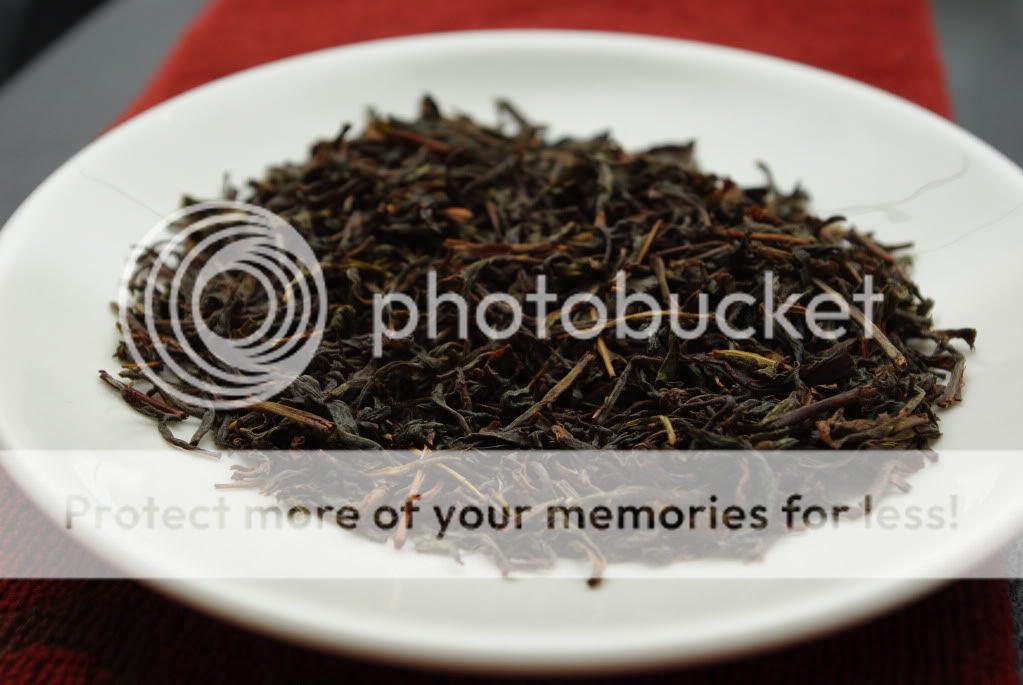
Greenfield Estate Ceylon is a high-grown black tea from the Uva District in Sri Lanka. The aroma of the dry leaves is interesting – kind of a mix between caramel and peach. It smells deliciously fruity for being an unflavored black tea. The leaves are medium size, dark brown, rolled, twisted pieces. The color of the leaves is consistent throughout the blend, but the aroma is quite complex.
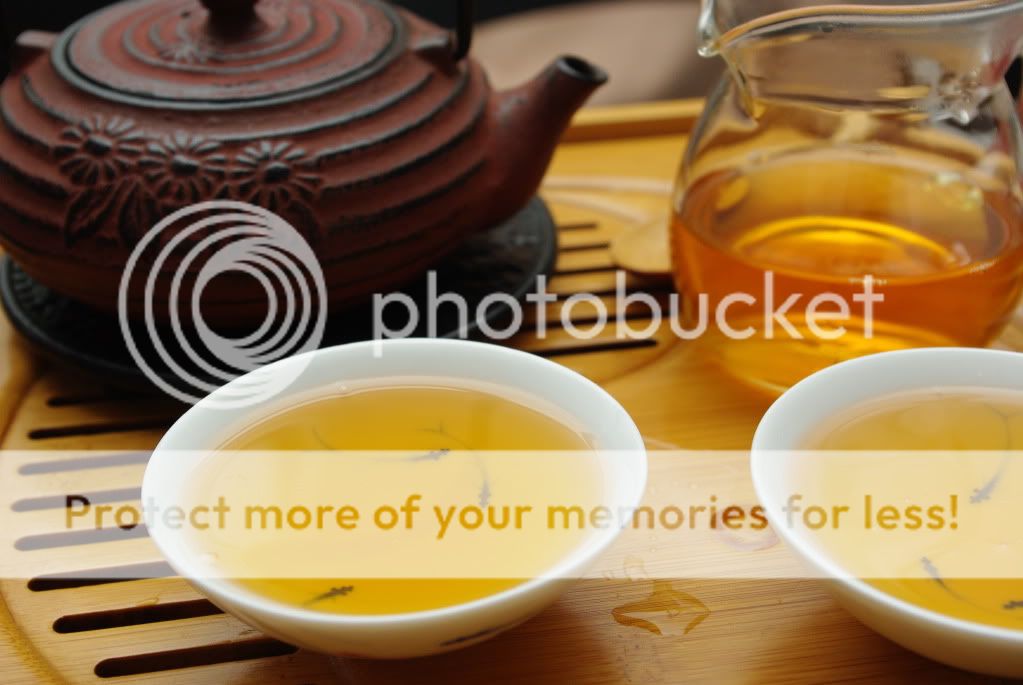
The steeped tea smells chocolaty with hints of fruitiness in the background. It smells sweet, not smoky. The liquor is an orangey red color.
The taste is sweet, with a lot of fruity notes… especially peach and apricot. It has a very nice chocolaty finish. Dryness is present, but not too much to be an issue. It is definitely not bitter.
I really enjoy this tea. I finished the cup and wanted more. It has such a sweet, but not too sweet, flavor. I didn’t realize so many fruity flavors could be in one tea. It is bold without being too strong; no need to add sweeteners.

Monday, February 21, 2011
Arbor Tea's Rembeng Estate Assam Review
Type: Black
Origin: India
Price: Free sample (regular price - $9.95 for 3.5oz.)
Vendor: Arbor Teas
Brewing Method: Per Instructed - 1 teaspoon of leaves, 1 cup of filtered water, heated to 212°F, steeped for 3-5 minutes
Overall Score: 4.2 out of 5
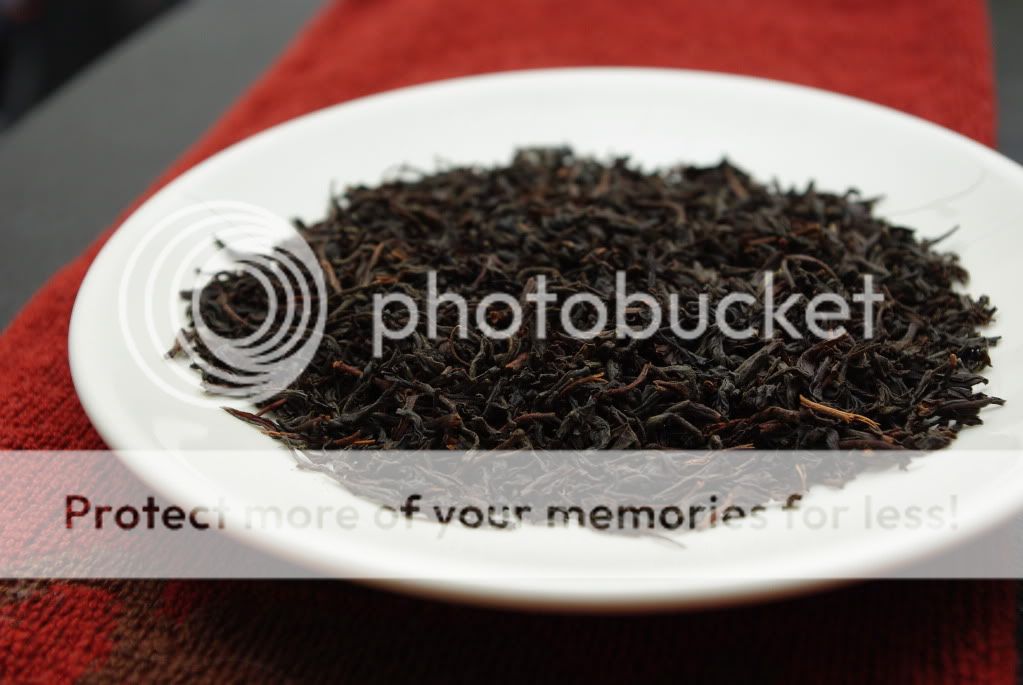
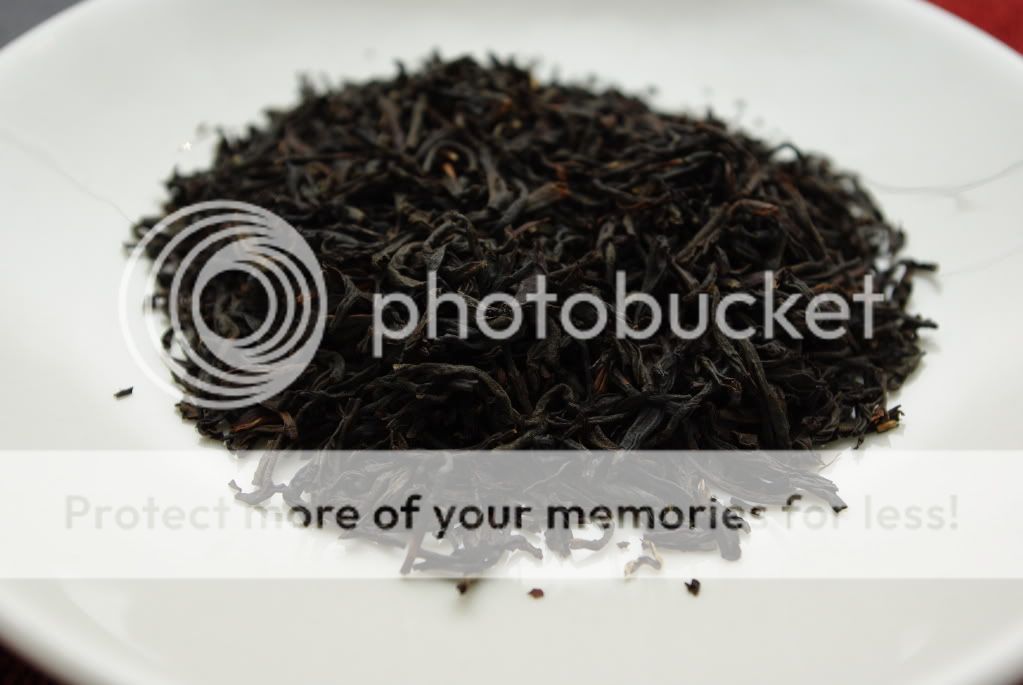
This Rembeng Estate Assam tea is, according to Arbor Tea’s website, located “…near the banks of the Brahmaputra River.” The first aroma I recognize is a sweet, malty, chocolaty smell coming from the bag. The dry leaves are longer than most black teas; they are thin, rolled, slightly twisted pieces. The hue is overall dark brown with rare bits of orange color.
The malty aroma is brought out more as the leaves are steeping. There is something kind of “roasty” about the aroma, as well… quite similar to very weak coffee. The color is a beautiful reddish orange.
The taste follows the aroma; it is malty, with a dark roasted flavor. It is more astringent than I would like, however. There are some fruity notes that pop up in the after taste – a mix of apricot and peach. The dark over tone of the roasted flavor still takes center stage, though.
This is definitely a bold tea that could give hearty Irish Breakfast tea a run for its money. This Assam isn’t bitter, but it isn’t the sweetest thing either. The dryness is a tough one to get through, but the dark malty flavor makes it worth it.

Sunday, February 13, 2011
Arbor Tea's Masala Chai Review
Type: Black
Origin: India
Price: Free sample (regular price - $17.50 for 5.5oz.)
Vendor: Arbor Teas
Brewing Method: Per Instructed - 1 teaspoon of leaves, 1 cup of filtered water, heated to 212°F, steeped for 3-5 minutes
Overall Score: 4.0 out of 5
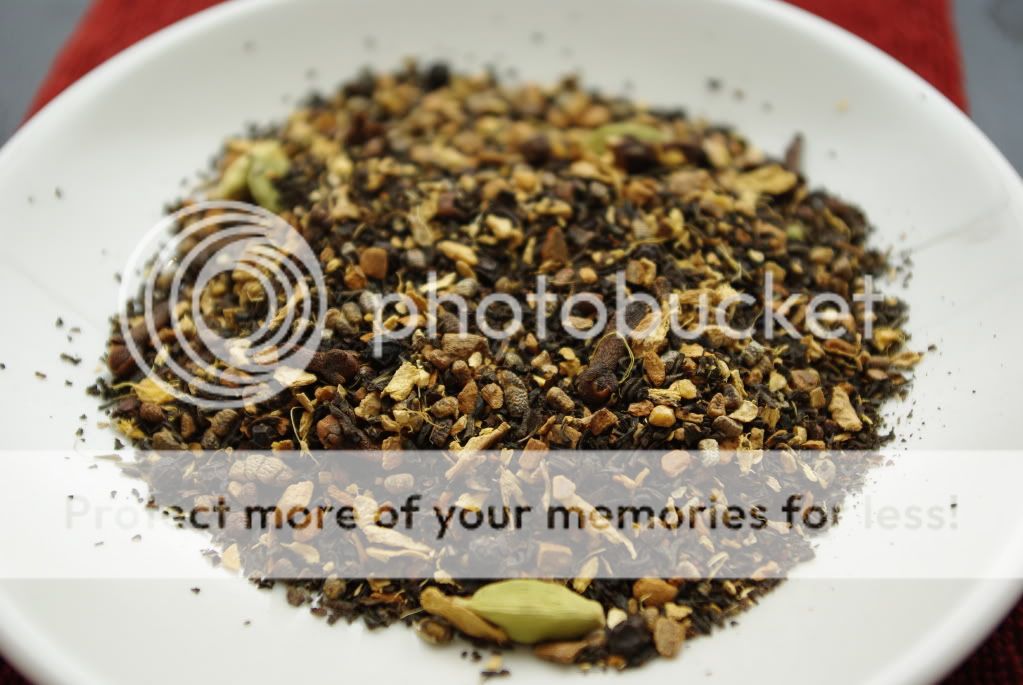
Masala Chai is a black tea base (I am assuming Assam) with green cardamom, cinnamon, ginger, cloves, and black pepper. Upon opening the package I can smell the cinnamon and cloves right away. It has an overall spicy aroma between the ginger, cinnamon, cloves, and pepper. The dry blend is colorful with the yellowish ginger, brown cinnamon, and green cardamom against a black background of tea leaves. The vast amount of cloves worries me, though.
The liquor smells spicy as the cloves and cinnamon battle it out to be the most prominent scent. I can faintly smell the ginger in the background. The color is dark orange right out of the teapot and then it turns to a light brown when the milk is added.
Wow, despite my worries about the army of cloves in the blend, this chai doesn’t taste half bad. With the milk added, per recommendation of Arbor Tea’s website, it cuts the harsh spices and gives them a warming characteristic rather than a stabby one.
The cinnamon and cloves are still front and center, of course, but I can also taste the ginger in the background. The tea has a general warm, soothing feel, yet the hearty flavor still packs a punch. I could see this being a good breakfast or “wake me up” tea.